Why we love it
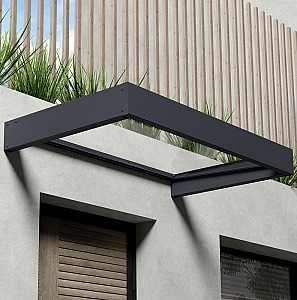
Why we love it
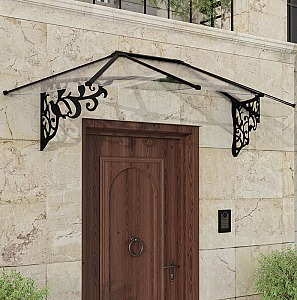
Why we love it
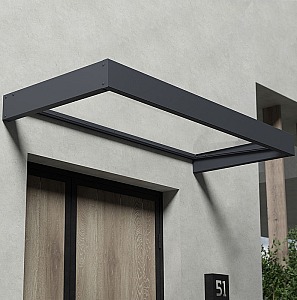
Why we love it
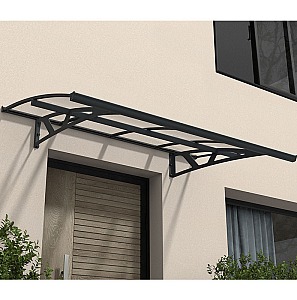
Why we love it
Why we love it
Why we love it
Why we love it
Why we love it
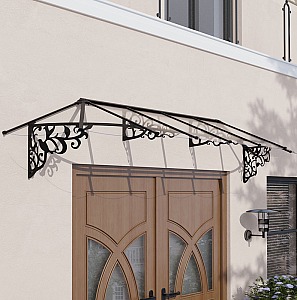
Why we love it
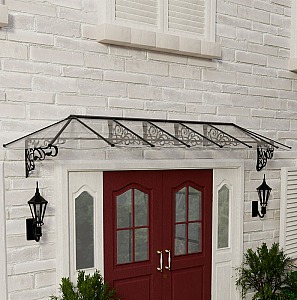
Why we love it
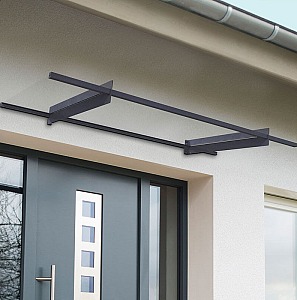
Why we love it
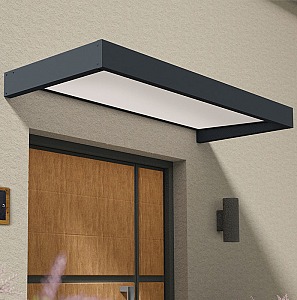
Why we love it
Why we love it
Why we love it
Why we love it
Why we love it
Why we love it
Why we love it
Why we love it
Compare over 34 door canopies from trusted UK retailers. Lead-effect, polycarbonate and glass, priced and ranked in one place.
A door canopy does two jobs at once. It keeps rain off your door and lock and it gives a plain entrance real character.
We make finding and buying the right door canopy as simple as possible.
Search over 34 canopies. Filter by width, projection, price and material.
Every listing shows the width, projection, material, fixings and warranty. No guesswork.
We link directly to the retailer with the best current price — saving you time and money.
Your canopy arrives free to most UK mainland addresses, usually within 3–7 working days.
Join the UK homeowners who found the right door canopy through Best Door Canopy. Live prices, honest specs, trusted retailers.
Choosing the best door canopy comes down to four things: width, projection, material and how it looks against your house. Whether you want a compact polycarbonate door canopy over a back door, a classic lead-effect GRP canopy for a Victorian frontage, or a wide glass porch canopy for a modern build, the right one shelters the step and suits the brickwork behind it.
At Best Door Canopy we compare hundreds of products from leading UK retailers — including Canopies UK, Palram, Bradford Canopies, Richardson & Starling, Juliet and Homelux — so you can see every option side by side and find the best price fast.
A front door canopy earns its keep on the first wet day. It keeps driving rain off the door face, the letterbox and the lock, so paint lasts longer and timber doors stay dry. Anyone standing on the step — you with the shopping, a delivery driver, a visitor — stays dry too. Parcels left in a porch recess survive a downpour rather than sitting in a puddle.
There is a plain visual gain as well. A flat frontage with a bare doorway looks unfinished. A porch canopy with shaped brackets adds shadow, depth and a focal point, which is why estate agents often suggest one before a sale. It is one of the cheapest exterior changes you can make.
Canopies are quoted as width x projection, almost always in millimetres. Width runs across the wall, projection is how far it sticks out. Here are the sizes that cover most UK homes:
Two canopies at the same width can behave very differently in wind and rain. These are the specifications worth comparing:
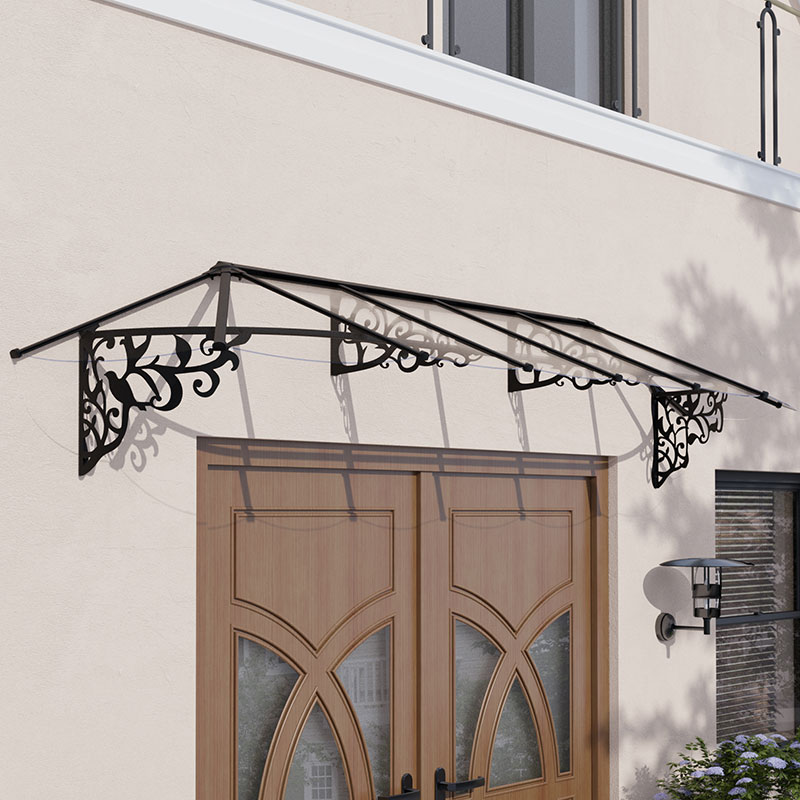
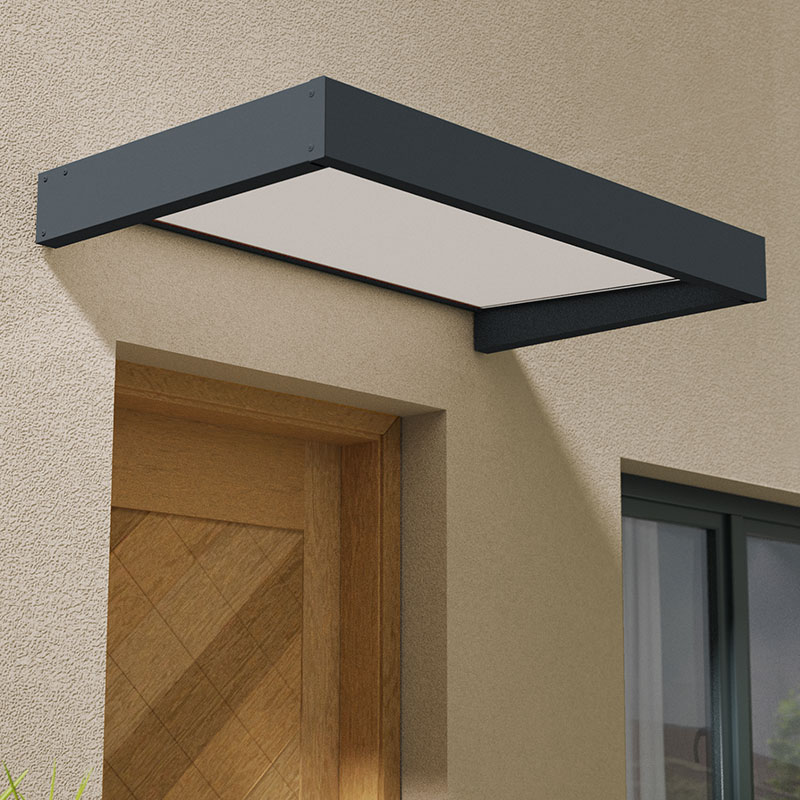
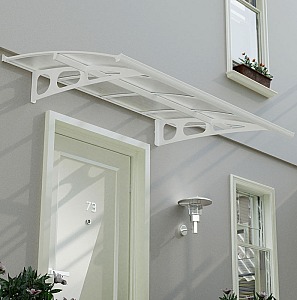
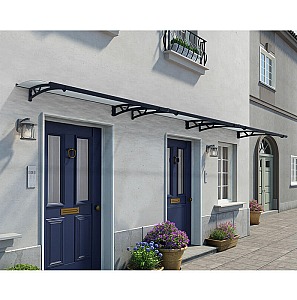
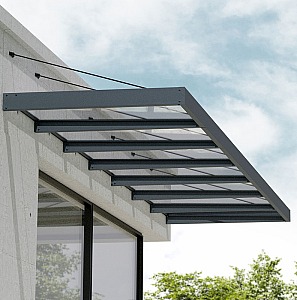
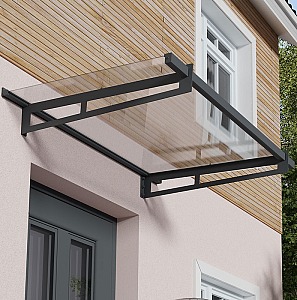
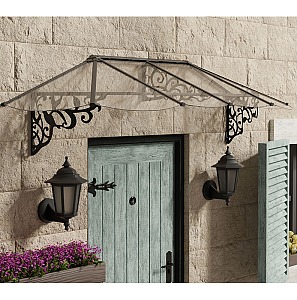
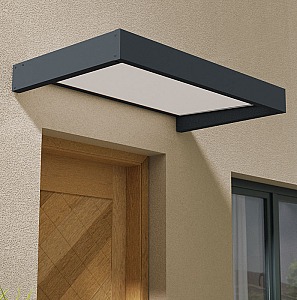
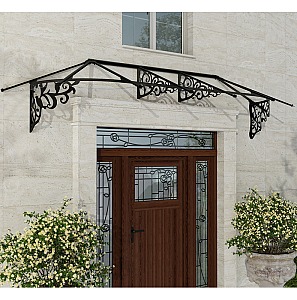
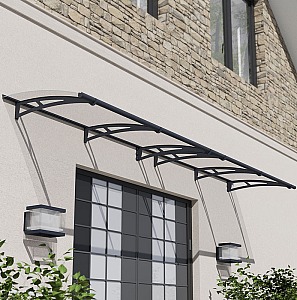
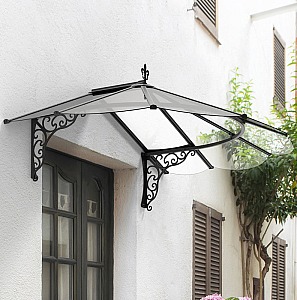
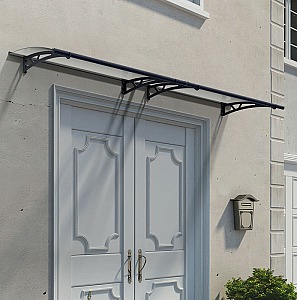
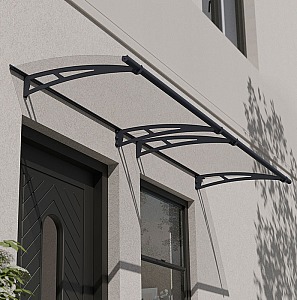
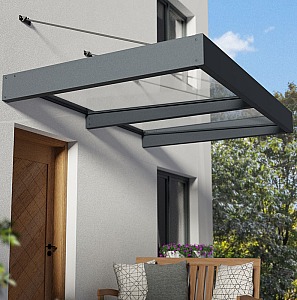
Three shapes dominate UK door canopies. A flat canopy is a simple slab on brackets, cheapest to buy and easiest to fit and it suits contemporary and terraced houses. A pitched canopy has a small apex roof, often finished in lead effect or tile effect GRP and it reads as a natural extension of a traditional roofline.
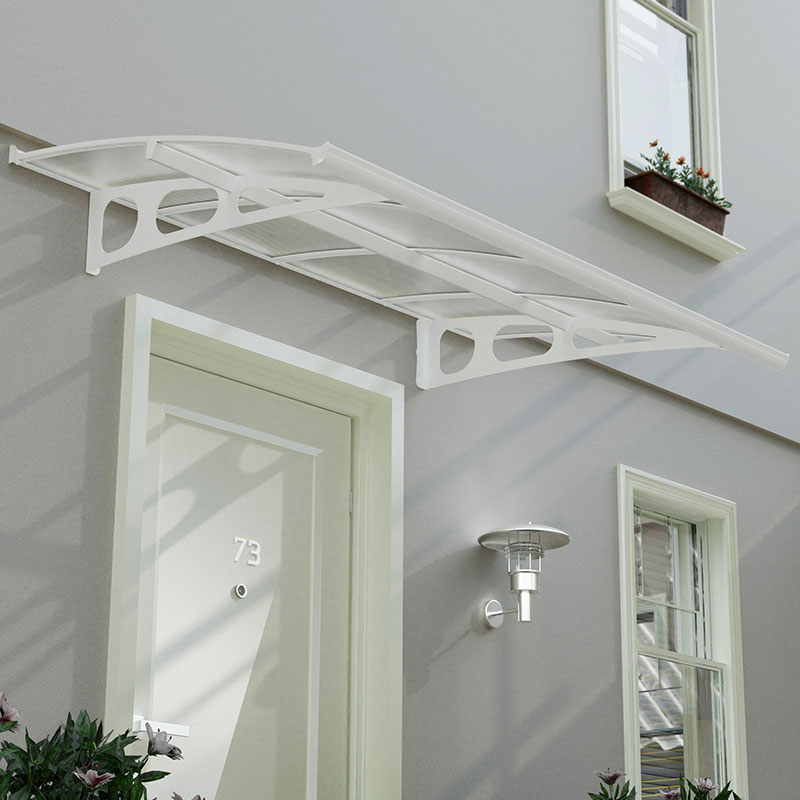
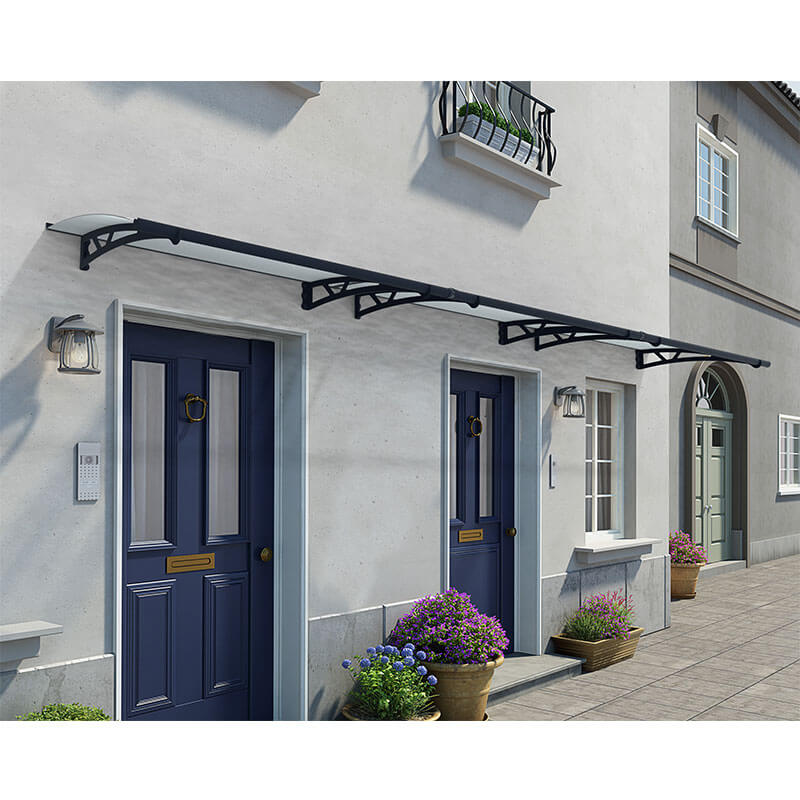
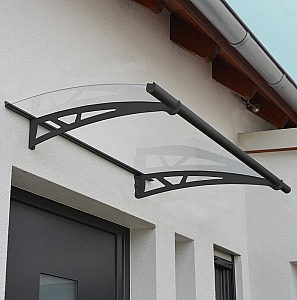
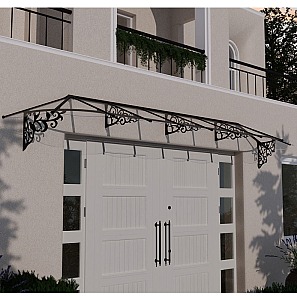
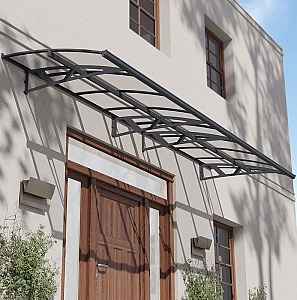
A bullnose or curved canopy sweeps down at the front, throwing water further from the step and softening a hard frontage. Corner brackets and scalloped edges are worth considering on period properties.
Most retailers we compare offer free UK mainland delivery on door canopies as standard, which counts for a lot given the awkward box sizes involved. Typical delivery runs from 3 to 10 working days, with some retailers offering a named-day slot. Check the product page for your postcode, as parts of Scotland, Northern Ireland and the islands can carry a surcharge.
Canopies arrive as a kit with brackets, fixings and instructions. Allow around two hours for a 1200mm GRP canopy with two people; wide glass canopies take longer and are heavy enough to justify a fitter. Always drill into solid masonry, never into mortar joints alone.
A domestic door canopy normally counts as permitted development and does not require planning permission, so long as it is modest in projection and sits within the usual limits for a porch or canopy: no more than 3 square metres of ground area, under 3 metres high and at least 2 metres from any boundary fronting a highway. Listed buildings and homes in conservation areas or national parks follow tighter rules — ask your local planning authority before you order.